Thursday, 8 October 2015

Photography-shutter speed and aperture

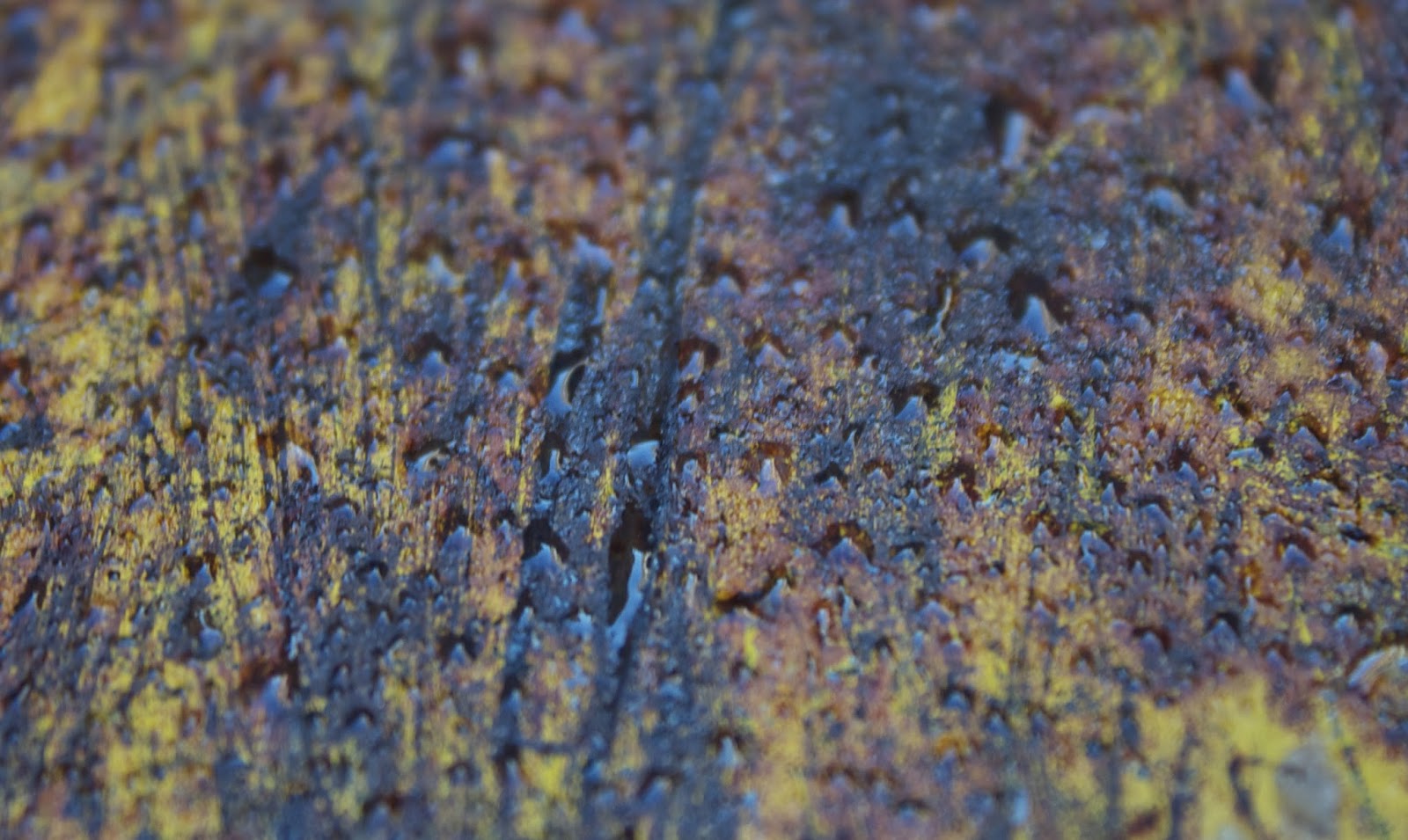
I was taking photos this morning with different shut speeds and apertures and I found I can understand them better now. I was outside on the same location, so I used same ISO which was 100.

f/4 1/30

f/4 1/160

f/4 1/100
f/4 1/60

f/4 1/50

I set the aperture to the biggest I can because I was photoing a surface, I didn't want any depth of field. The shutter speed I was starting with  was too high, then I changed it too low which made the image too dark. I gradually adjusted the shutter speed until where I felt right. In this case, I think f/4, 1/60 works the best. 

I also found that because you think more about the aperture and shutter speed, when it comes to editing on computer, there  are not very much need to be changed, especially exposure. I adjusted the colour a little bit and add a filter on Photoshop.

adjusted colour, contrast and saturation on iPhoto

used Fresco on Photoshop

added Tilt Blur

Then I took more photos on different part of the surface.

f/5 1/15

adjusted exposure and colour

f/5 1/15

adjusted exposure and colour


 f/4.5 1/60                                              f/4 1/40


adjusted colour

f/4 1/13


f/4 1/20 I changed my viewpoint slight

antique

sepia


f/4.5 1/40

antique

sepia


Then I thought I should change the aperture to see what would happen. This was two surface in a angle, so there was a depth of field. I changed the aperture from big to small to big again try to get rid of the depth of field but it did not work. A few examples:
f/5.6 1/20

f/5.6  1/15

f/19 1/25

f/14 1/5
f/5.6 1/60

I chose the f/5.6 1/15, and cropped the blur parts out.


I noticed that when I use manual, I got both JPEG and RAW image and they are in different colour. I read something about the RAW image, but have not look it into detail yet. These images here I did not change anything
JPEG
RAW

JEPG

RAW

RAW

JEPG

A few more


Ok, where did I get these photos? When I was doing research, I saw two photographer's work who using metals as subject. And I always remember Anna King's painting and her talk. She said something about the rustling metal. From one of my shop window, I see this metal roof every time I walk on that stairs. When I got my camera from the car today,  I went to that rubbish skip to look for some metals i can bring to studio to use as a background. I did not find any but I saw the skip. David Cass talked about surface yesterday. So I thought I would take some photos of the surface on the skip. When reviewed the photos, they look interesting. So I took a lot more and at the same time, practised shutter speed and aperture. 

I did not do a lot of editing with these photos, especially with cropping. I only cropped a few. I did pay attention about the composition in the view finder. I am happy with today's experiments. 


Friday, 2 October 2015

Melrose Abbey

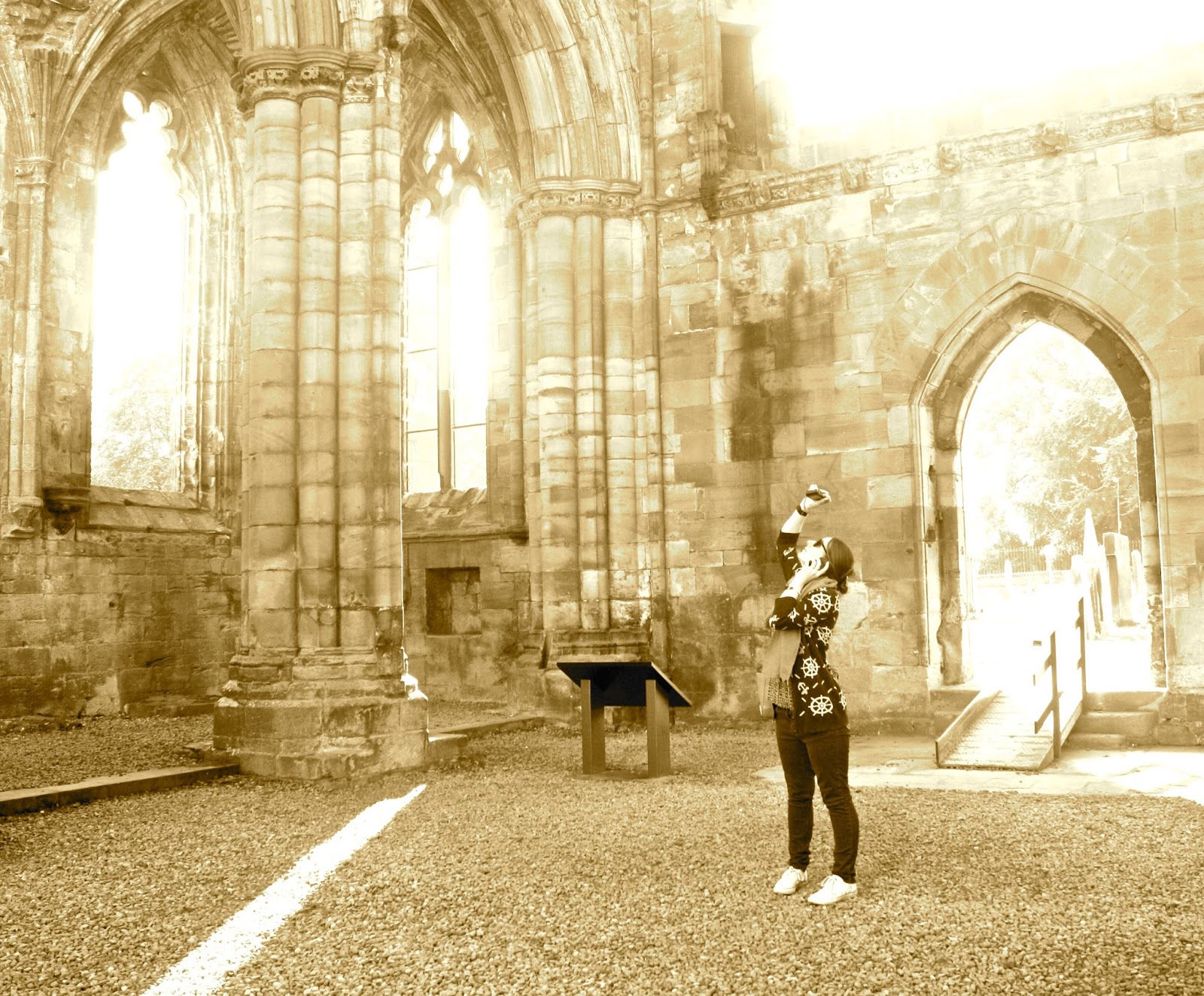
I went Melrose Abbey on Tuesday with my friend. I did not forget to take some photos of course. Tried to use manual function but found it was quite hard when you are out, especially when time was limit. But I think the more you try the better you will get with changing settings for different situations. It was not very successful, with editing afterwards, I got 3 photos I quite like.

I was reading about exposure last night. And it says that sometimes, over exposure and under exposure suit the some situation better and can create a kind of atmosphere.

This one is over exposure, i think it works well, lights make this empty and high up space warmer and brighter. All you can see from the windows and door is lights and i think it suits this Abbey atmosphere. 


I increased exposure on editing for this one and I did not choose black and white. This colour make the abbey and the grave yard feel ancient but in a warmer way. Only thing is perhaps I did not take the photo from the right viewpoint, even though I tried to straight it, I still feel it is not quite right. 


I was high up on top of the Abbey and spotted  this little stone drain. I tried to find a good viewpoint and had this shot with the only the sky as background. I changed it to black and white. I think this makes the photo stronger. quite like this one although it is not my type. 

Beatric Helg

Beatric Helg was born in Geneva, Switzerland in 1956. She is well known for her startling fusion of still life photography, geometric abstraction and industrial materials. She constructs images like stage sets in which to explore the forms, hues and textures of the neglected materials such as rusted metal and frosted glass.

I found her work are so beautiful. I like the the rusted raw and hard feeling materials been transferred to a luminous feeling with beautiful colours.


By adding geometric forms and achitecture perspectives, space created.


By placing glasses in front of the raw and rusted background, with lights shining on certain parts and from certain direction, there  are transparency,  contrast, space, luminous, reflection and shadows. 


I love her work. By doing research for different photographers, i saw different type of work. But for some of the work I started to question "what is for" . As Sam Cornwell said in his talk, he stopped to capture the world and turned to his family. But Beatric Helg's work make me feel touched, the still, the light, the colour, the space. She created a world with these simple materials.

Thursday, 1 October 2015

Experiments with lights

I took some photographs for lights again. I used different source of lights and found they can give different effects. Than I tried with fire. The results were very unexpected. I set the camera to slow shutter speed and smaller apertures, adjusted the ISO according to the light source. I moved the camera in different directions. Tried to move it slower and faster. And got different results. It is very interesting. I edited some of them and found black and white works better. I also used photoshop to combine two photos into one. quite interesting. I am not sure what to do with them yet. I think they can form a set of photographs in some way. I am leaving this for later just now.


Different movement of the camera with the different source of lights


With fire


Niall McDiarmid

Niall McDiarmid is a photographer based in London. His work is primarily about documenting Britain and has been published and exhibited widely.

His first book Crossing Paths was published on 2013. He started this project on 2011, he took hundreds of train journeys, visited over 120 towns and photographed 800 people over 3 years. He was influent by Daniel Meadows who is an English photographer and had a similar project in 1970s.

This project managed to be both a personal project as well as a document of modern Britain.  Independent  on Sunday said. He struck up conversations with people he thought  interesting and enable him to capture something of their personality in portraits. At the same he documented the modern sociality.

Here are a few photographs from Crossing Paths. When looked through them, I found on each of the photographs, the subject- the portrait person and the background come together as a whole, either their the colours or patterns of their clothes match the background or the way they are wearing, standing or looking together with the background tells a story, reflects how a certain life style fits in the background society.

I first heard his name from Sam Cornwell's talk. When I looked through his work I wondered why these portraits can stand out from other street portraits photographs. I looked for more information this time and looked into details of the photographs. I do find they are great photographs, lots of thinking are in them. They are not telling you about a person, they are telling you about a society. When they come together, they tell about a modern Britain today.


Nail McDiarmid recently had an interview by an Italian magazine Fortographia about the Via Vauxhall book. He said a bus stop would give him the chance to photograph an interesting cross section of south Londoners travelling their daily journeys. The Vauxhall neighbourhood has a huge urban redevelopment going on but the same time it has a wonderful social and ethnic mix. So I can see he has his reason to choose a location with related to our unit Location Photography. He said he had no specific person in mind when he chose his subject, just something catches his eyes. I think this "something" is not randomly something, it comes from his understanding about the society, his photographic instinct, his understanding about the relationship between the subjects and the surroudning area.  I like his work.